
How to Run a West Marches Campaign With Multiple GMs
August 26, 2026 · Mitchel Pigsley
August 26, 2026 · Mitchel Pigsley
A West Marches campaign is one of the harder formats to run well, and it gets even harder the moment more than one Gamelord is involved. The thing that makes it work, a persistent shared world, is also the easiest thing to lose track of once several people are contributing to it independently.
Let's break down what the format actually is, and what it takes to run it well with multiple GMs without losing the thread.
The format was named and popularized by Ben Robbins back in 2007. The core idea is simple: instead of one fixed party meeting on a schedule, you open the table. Players sign up for whichever expedition is running that week. More than one Gamelord can run sessions into the same shared setting. No two groups need the same members, and no two groups need the same GM.
What makes it work is the world underneath all of it. Every session, whichever party ran it, happens in the same persistent place. What one group discovers, another group can walk into later. What one group provokes, another group might have to deal with. The setting is the throughline, not the roster.
That persistence is also exactly what breaks without help. Someone ends up as the unofficial world state coordinator, manually reconciling what happened in every group's session so the setting stays consistent. Lore lives in a wiki page or a shared doc that is stale by the time anyone reads it. Some groups even invent manual approval steps, a rule where a new location or faction needs sign-off from two or three GMs before it is considered canon, just to keep everyone's contributions from contradicting each other.
And underneath all of that sits the harder problem: keeping one party's discoveries from leaking to a party that was not there. Not because anyone is trying to cheat, but because it is genuinely hard to remember, session after session, which of your players knows what in character versus what you told them as a friend outside the game.
Strip away everything that is really just logistics and taste, and a multi-GM campaign needs three things.
One shared, persistent record of what is true in the world so far. More than one GM able to add to that record independently, without waiting on each other or quietly overwriting each other's work. And a way to keep what one party learned from bleeding into a party that was not there, without anyone having to police it by hand.
That is the whole list. Everything else, scheduling, sign-ups, who is running which week, is a solved problem already, and it does not need new software.
A realm in Realms of Shod is not a session container. It is the persistent world itself. Every session, transcript, and compendium entry from every group that plays in it accumulates into the same place over time, so the longer the campaign runs, the richer and more interconnected the archive becomes, no matter how many different GMs and parties contributed to it.
More than one person can hold the Collaborator role in a single realm. Each Collaborator can run their own sessions and manage their own content independently. No single Gamelord has to be the bottleneck for a world that is supposed to belong to everyone playing in it.
The compendium builds itself as this happens. As each group's session gets transcribed, whichever entities and relationships come up are found and linked automatically, regardless of which GM was running that particular session. Nobody has to stop and update a wiki, because there was never a separate wiki to maintain in the first place.
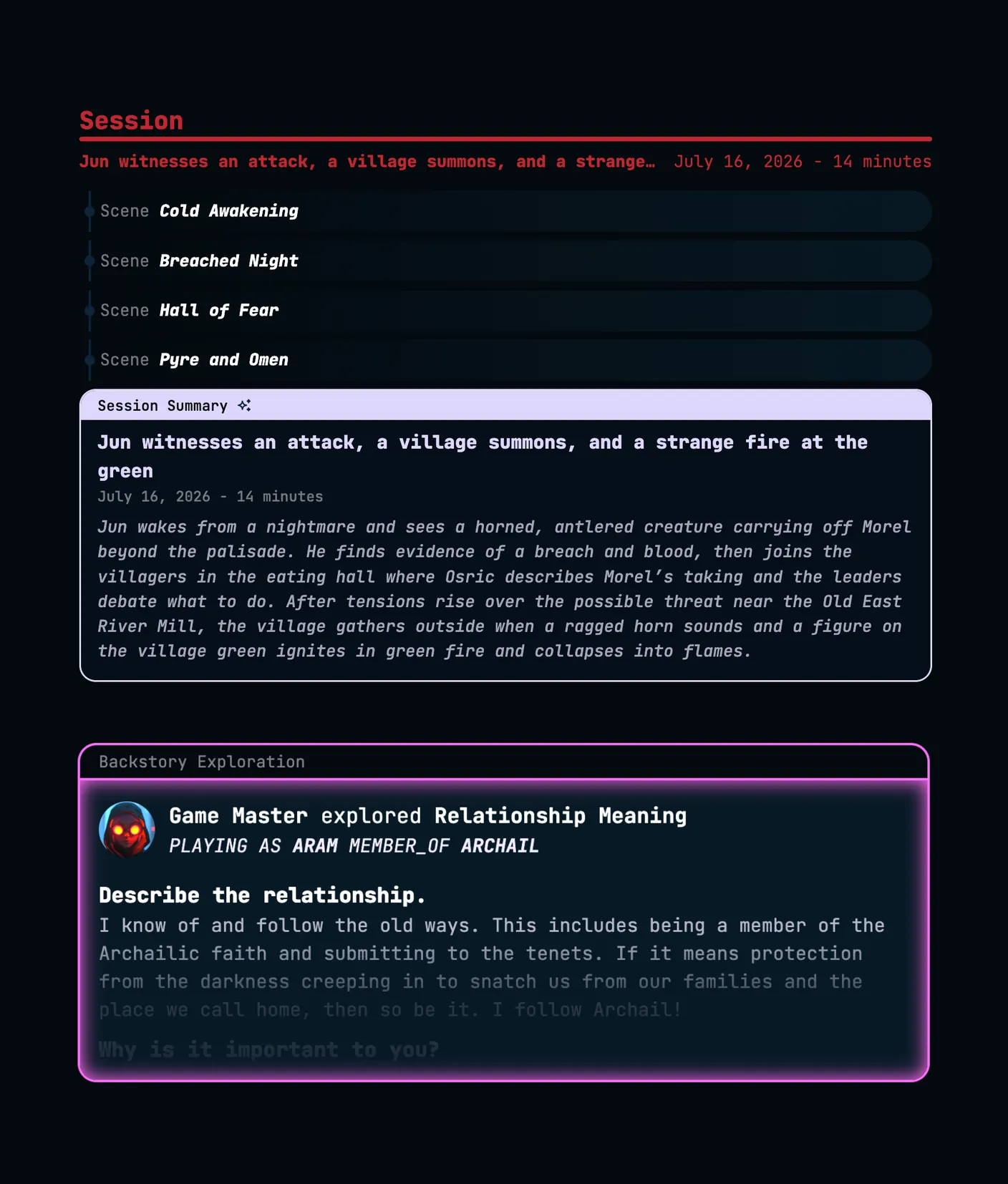
And this is where the leak problem gets solved structurally instead of by trust. Session content is visible to the players who took part in it, plus realm admins and owners, who can see everything by default. Everyone else in the realm sees a Session Rumor instead: a short, in-world whisper about what happened.
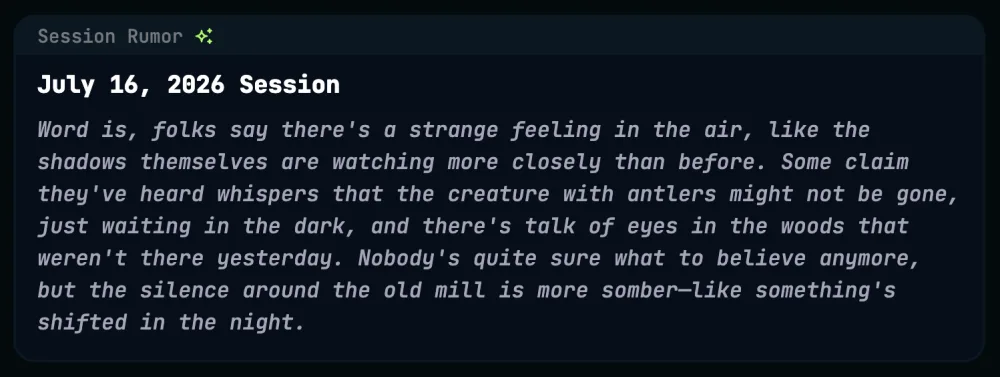
A player from a different party genuinely cannot metagame what they were never shown. They just hear that something happened out on the frontier, the way their character would.
None of this cares which ruleset any given table is using either. A realm supports up to 48 members, which is enough room for a full West Marches roster spread across several rotating parties without anyone bumping into a cap.
Realms of Shod does not schedule your sessions, and it does not manage a sign-up roster. There is no built-in version of the multi-GM approval step some communities use to keep new content consistent either. Keep using whatever you already use for the logistics side, a Discord channel, a sign-up sheet, a shared calendar. The realm is not trying to replace that. It is there so the world itself does not fall apart in the gap between sessions.
The player from the other party still hears about what happened last week. They just hear it as a rumor from the road or a dusty tavern, not as a leaked summary from a doc nobody remembered to lock down. The world stays consistent as play happens, no matter how many Gamelords are adding to it.
If that is the campaign you are trying to run, Realms of Shod is built to hold it.