
D&D at the speed of a group chat.
Play-by-Post D&D: Platforms, Pacing, and Rules That Work
Play-by-post (PbP) is D&D played in writing, one post at a time, on a forum or chat server. It survives time zones, new babies, and night shifts. It also dies quietly more often than any other format. This guide covers where people play, the pacing rules experienced PbP GMs swear by, how to run combat without it taking a month, and how to start a game that lasts.
Then it asks a question PbP veterans rarely say out loud: what if the choice between live and async was never the right choice to make?
The Quick Answer
| Decide | Recommendation |
|---|---|
| Platform | Discord for friends; a PbP forum to recruit strangers |
| Pace | Write it down: "one post per player per day" or "three a week" |
| Party size | Three or four players. You can add, you can't un-stall. |
| Channels | Separate in-character from out-of-character on day one |
| Combat | Group initiative, visible AC, GM resolves rounds on a deadline |
| First post | End it with a decision, not a description |
| Missed posts | Agree in advance: the GM moves the character cautiously |
Where People Play by Post
| Platform | Best for | Watch out for |
|---|---|---|
| Discord | Existing friend groups, fast pacing | Long threads become hard to reread |
| Myth-Weavers | Classic forum PbP with integrated sheets | Forum pace, older interface |
| RPOL | Long-running forum games | Limited notifications, per longtime users |
| Role Gate and similar apps | Mobile-first async play | Smaller communities |
| D&D Beyond and Giant in the Playground forums | Finding players | Recruitment threads move fast |
| Tavern Keeper and other dedicated tools | Campaign management for PbP | Check activity before committing |
Discord
The default for groups who already know each other. Threads keep scenes apart, a dice bot handles rolls, and notifications keep momentum. The weakness is the scroll: after a few months, finding what the priest said in week three means reading everything.
Forums
Forum PbP has decades of tradition behind it. Threads are slower and more deliberate, which suits writers who enjoy longer posts. Forums are also still the best place to recruit strangers, since recruitment boards are built for it.
Dedicated apps
A handful of apps are built specifically for async roleplay, with mobile posting and character tools. They vary widely in activity, so look at recent games before you commit.
How to Run It
- 1Recruit small. Three or four players. A six-person PbP stalls the first time two people go quiet.
- 2Publish the pace. Put your posting expectation in the recruitment post, not after the game starts.
- 3Split the channels. In-character in one place, out-of-character in another. Some groups use a prefix instead.
- 4Open on a choice. Your first post should end with something the players must decide.
- 5Set a round deadline. If a player hasn't posted by the deadline, the GM moves their character cautiously and the game continues.
- 6Keep scenes short. Wrap a scene when its question is answered. Long scenes are where PbP games go to die.
- 7Summarize as you go. Post a short recap when each scene closes. Future you will be grateful.
Running combat over text
Combat is where PbP slows to a crawl. Experienced GMs share a few habits: roll group initiative (players, then enemies), post enemy AC and rough health so players can narrate their own hits, and resolve monster turns once per day. Some groups run the big fight live on voice for an hour and handle everything else by post, which is worth remembering for later.
Writing good posts
A few habits make any PbP game easier to follow. Put your character's action early in the post, then the flavor, so the GM never has to hunt for what you did. Tag other characters by name when you speak to them. Keep posts to a few paragraphs; a wall of prose slows everyone down. Roll in the post if the table allows it, instead of waiting for permission. And when you can't post for a few days, say so in the out-of-character channel. A short note keeps the game moving and saves the GM from guessing.
Why People Choose Play-by-Post
You searched this because a weekly four-hour slot stopped being possible, or because you love the writing side of roleplay. Both are good reasons. PbP lets writers write, lets introverts think before they speak, and lets a group spread across three time zones keep a campaign going. The frustration is that so many PbP games fade out, not with a decision, but with a silence nobody wants to name.
The Thread Is the Only Memory
PbP's great strength is that everything is written down. Its great weakness is the same fact.
| What PbP does well | What it struggles with |
|---|---|
| Keeps a complete written record | Making that record readable a month later |
| Fits any schedule | Keeping momentum when one player goes quiet |
| Rewards thoughtful writing | Fast, tactical, or high-energy scenes |
| Works without voice | Capturing anything said off-thread |
| One campaign per thread | Connecting names, places, and threads across the game |
Longtime PbP GMs give the same advice in forum after forum: take separate notes, because rereading the whole thread is exhausting. That advice tells you something. The thread was supposed to be the record, and it turns out to be too long to use. Players who drift away often do so after falling behind, because catching up means reading forty posts.
Async alone is a narrow road
PbP asks everyone to stay in one mode forever. Fast scenes crawl. The GM writes for hours a week. A player who misses a few days faces a wall of text. The format works best for a certain kind of player, and quietly filters out the rest.
Hybrid Play: Live When It Counts, Async in Between
The upgraded frame: live and async are not rival formats. They are two tempos of the same campaign. A growing number of GMs describe hybrid campaigns that play the big scenes live and keep the story moving by post between them, including a March 2026 piece on d20 Pub arguing that the game does not have to stop when everyone leaves the table.
What makes a hybrid campaign work, whatever tools you use:
- One shared record for both tempos. A live session and a week of posts should end up in the same place, readable the same way.
- Live for what is hard to do by text. Big combats, tense negotiations, and group decisions move better in voice.
- Async for what benefits from time. Downtime, backstory, letters, travel, and character moments reward a considered reply.
- Catch-up that isn't reading everything. Short recaps per scene, and an easy way to see what changed.
- Names that stay consistent. The NPC from the live session and the NPC in the post are clearly the same person.
- Nobody is punished for missing one tempo. Miss the live night, catch up by post. Busy for a week, catch up at the table.
You can run hybrid with Discord and discipline alone: a voice night every few weeks, a thread for the time in between, and a pinned recap after each.
Where Realms of Shod Fits
To be direct: Realms of Shod is not a play-by-post forum, and if your group loves pure PbP on a forum, keep it. Where it helps is the hybrid campaign, and the memory problem PbP never solved.
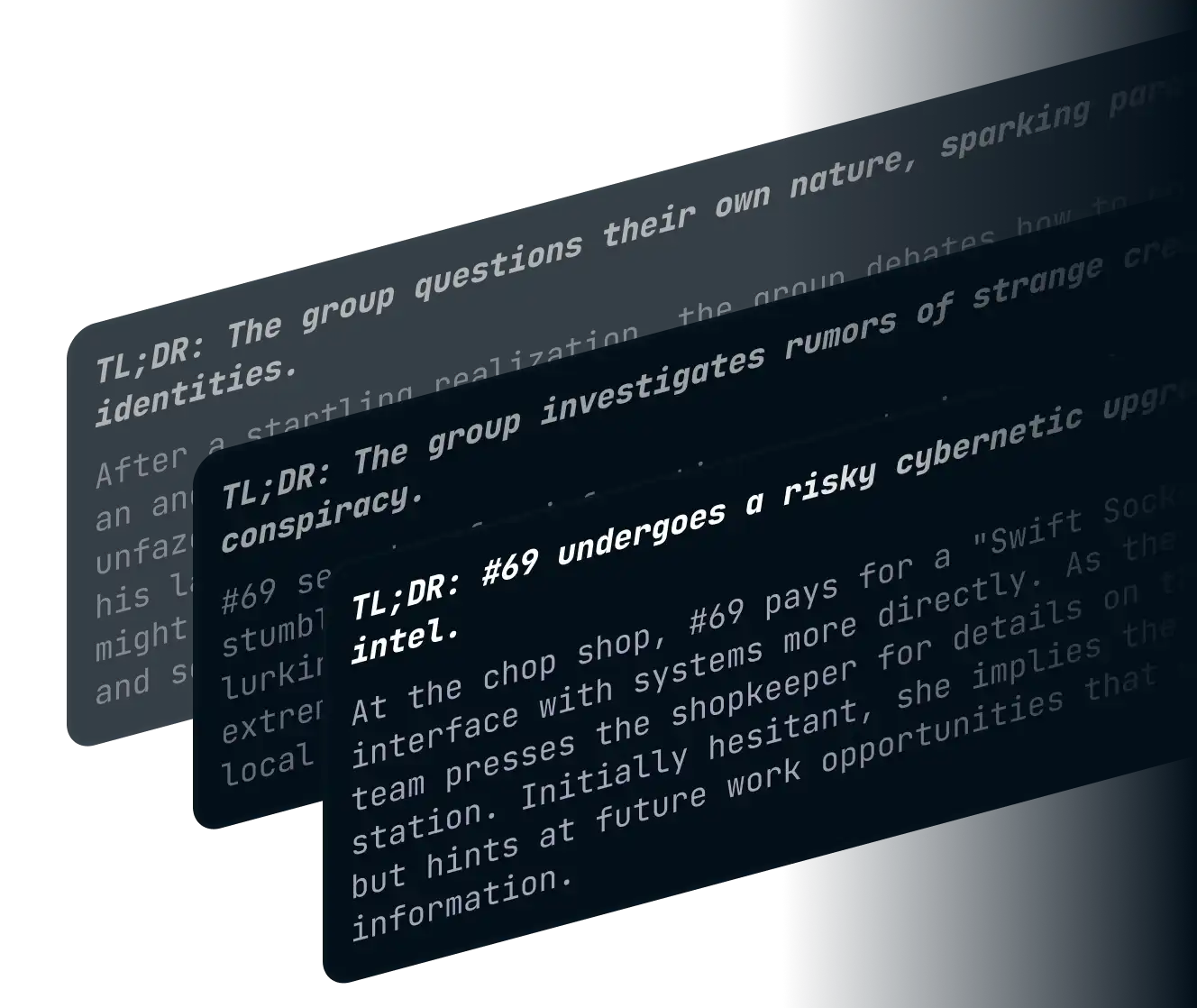
A realm holds the live half. Play in the browser with voice, video, chat, and dice in one tab, or run the Discord bot in your voice channel. Recorded sessions become transcripts, scene recaps, and a session summary, so the async half of your group reads a few lines per scene instead of a wall of text.
The shared memory spans both halves. The compendium files NPCs, places, and items from recorded play, so the innkeeper from the voice night and the innkeeper in this morning's post are one entry with one name. A player who missed the live session sees an in-world session rumor instead of spoilers.
Notes: the async half, in documents
A thread is written in the order things happened, which is the worst possible order for finding anything. Notes are the other shape: freeform markdown documents in the compendium, each with a name, an access list, and a place in search. Anyone from Collaborator up can write one, typing two square brackets to drop in a linked chip for a character or place, so a travel scene written over four days ends up as a document that names the people in it rather than forty messages somebody has to scroll back through.
The access list is the part PbP groups tend to want most. A note is private to whoever wrote it until they share it, either with chosen members or with the whole realm, and viewers can read without editing. That is how one player gets the letter the rest of the party never sees, without a side conversation the GM then has to remember happened. Reveal it later and the note is simply there, in the record, for everyone.
Backstory Explorations: writing that stays put
Play-by-post selects for people who like to write, and the writing they do between scenes is usually the best material in the game. Backstory Exploration gives it somewhere to land: a guided set of prompts about one of your characters, opened from Story Tools by Collaborators and above, published to the Gamestream as its own card rather than another entry in the session timeline. The quiet character piece nobody had room for in the main thread gets read, and it stays findable in month eight.
Publishing it as a Shadow shows everyone else an AI-rewritten Echo while the author and the realm's admins keep the real answers, which is a useful move in a game made entirely of text. The party can see that their rogue wrote something about the year she does not talk about. They cannot read it until she decides otherwise.
| Pure play-by-post | Hybrid with a realm |
|---|---|
| Every scene is text | Big scenes live, quiet scenes async |
| The thread is the record | Transcripts, recaps, and compendium are the record |
| Catch-up means rereading | Catch-up means scene recaps, or a rumor |
| NPCs live in old posts | NPCs live in the compendium, with aliases |
| Scenes are findable by scrolling | Notes are named documents, searchable from anywhere in the realm |
| Secrets need a separate DM to one player | Notes shared with chosen members, revealed to the rest later |
| Character writing sinks below the next post | Backstory Explorations get their own card, Shadows hide the rest |
| Free | Core features free; recording uses coins |
Play-by-Post FAQ
What is the best platform for play-by-post D&D?
Discord for groups of friends who want fast pacing. A dedicated PbP forum if you need to recruit strangers or prefer longer, slower posts. The best platform is the one your players already check daily.
How often should players post?
Pick a pace and publish it before the game starts. One post per player per day is common for fast games; two or three per week works for slower ones.
How do you run combat in play-by-post?
Use group initiative, share enemy AC and approximate health, and resolve a round on a fixed schedule. For big fights, many groups meet live for an hour instead.
What happens when a player stops posting?
Agree in advance. The usual rule: after the deadline, the GM moves the character cautiously and the game continues. If a player goes quiet for weeks, check in privately.
Can I use Realms of Shod for pure play-by-post?
It isn't built as a PbP forum, so a dedicated forum or a Discord server is a better fit for pure text play. Realms of Shod suits groups who mix live sessions with async play between them.
Is play-by-post good for new players?
It can be. Slower pace gives time to look up rules and think about choices. New players do best with a patient GM and a small group.
Does async play work for systems other than D&D?
Yes, and some systems are easier. Lighter rules, or games where players narrate outcomes, keep posts moving without waiting for the GM.
Post Slow. Play Together.
Play-by-post keeps campaigns alive that a calendar would have killed. Give it a clear pace, a small party, and a record people can actually read. And if the story ever wants to speak out loud for a night, let it. The best campaigns move at more than one speed.
A realm is free to start, and the voice night it records turns into the short recaps your thread has been missing. See what a session recap looks like before you move a single scene off the forum.